Author: Dr. Odimientimi Agbedeyi
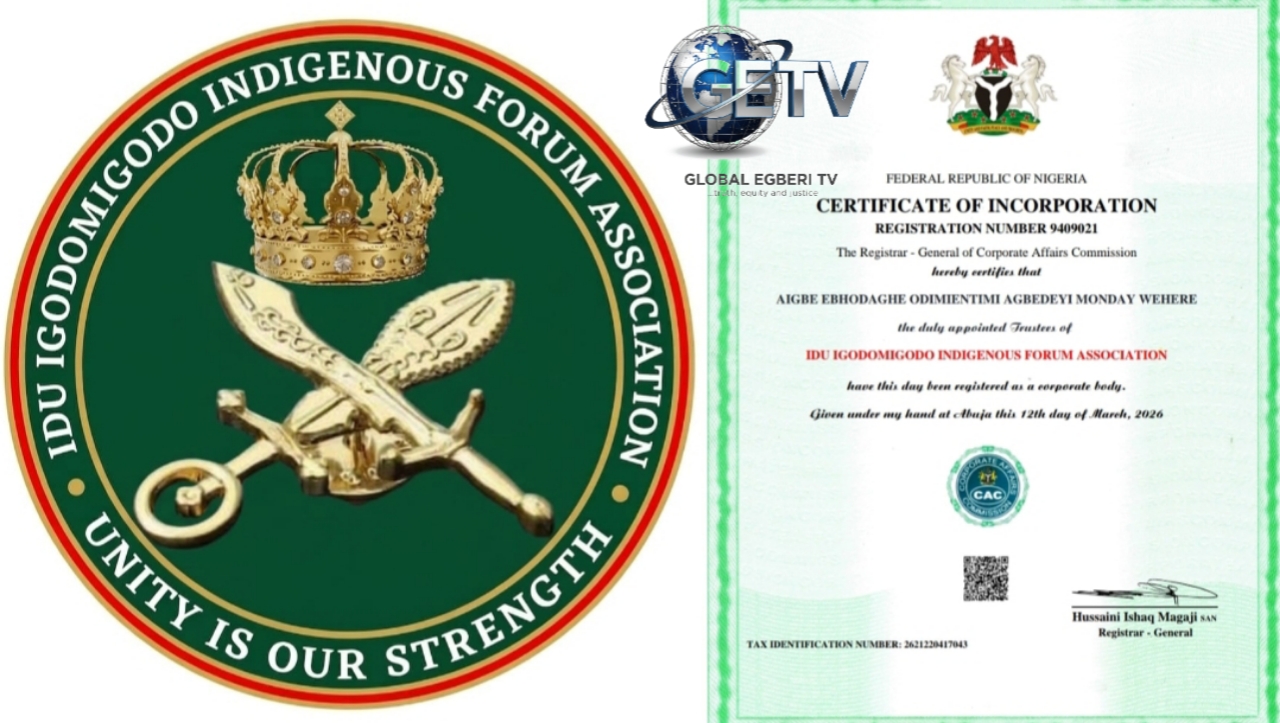
In a landmark achievement for indigenous communities in Edo State, the Idu-Igodomigodo Indigenous Forum Association has officially received its certificate of regeneration, formally recognizing the association and its members. This historic milestone represents a significant step toward reclaiming cultural identity, promoting indigenous governance, and ensuring equitable development in the region.
A Heritage Reclaimed
The association, uniting all co-stack stakeholders of Idu-Igodomigodo, was formed to affirm the community’s ancestral heritage and challenge imposed nomenclature. According to Aigbe Ebhodaghe Okosun, General Coordinator of the association:
“We decided to adopt the name Idu-Igodomigodo because it reflects our shared ancestry and co-stakeholder identity. The name Edo/Benin is alien to our lineage and has historically marginalized communities like ours.”
Historical Context and Marginalization
Idu-Igodomigodo has long been a culturally significant region with active participation in governance and trade. Over the decades, however, political and administrative power concentrated in Benin ethnic structures, limiting recognition and development for other communities within present-day Edo State. This association seeks to correct historical imbalances and promote inclusivity.
Key Objectives of the Association
The forum has outlined critical goals to advance indigenous rights, cultural preservation, and community development:
Recognition of Traditional Rulers: Advocate for the formal acknowledgment of all traditional rulers within the region who are yet to be recognized as autonomous kings by the Edo State government.
Equitable Development: Ensure that all ethnic nationalities in Edo State receive equal government attention, resources, and infrastructure development.
Advocacy for State Creation: Lobby for the creation of additional states from present-day Edo State to enhance local governance and empower indigenous communities.
Cultural Preservation: Promote historical awareness, protect cultural heritage, and foster pride among community members.
Leadership and Community Engagement
Leadership of the forum is structured for strategic direction and effective communication. Aigbe Ebhodaghe Okosun, as General Coordinator, oversees decision-making and community mobilization. Dr. Odimientimi Agbedeyi, Public Relations Officer, manages communications and public engagement:
“Our mission is clear: protect our heritage, ensure equitable development, and guarantee that all voices within Idu-Igodomigodo are heard. This recognition is just the beginning of a journey toward meaningful reform and empowerment for our people.”
The association also plans inclusive engagement programs to ensure that every member is involved in advocacy campaigns, policy negotiations, and cultural initiatives.
Implications and the Road Ahead
The formal recognition of the Idu-Igodomigodo Indigenous Forum Association provides a legitimate platform for negotiating with government authorities and advocating for equitable development. The forum’s efforts are expected to strengthen governance structures, promote social justice, and advance the socioeconomic status of communities historically marginalized in Edo State.
“In the coming months, we will roll out programs to involve every member of our community, ensuring that our struggle for recognition and equality is truly collective and transparent,” affirmed Aigbe Okosun.
This historic achievement marks the dawn of a new era of cultural pride, advocacy, and community development for Idu-Igodomigodo and serves as a model for other indigenous communities seeking recognition and equal treatment.
Source: Global Egberi Media International



Join the Discussion (1 Comments)